NL 2800: a new concept of corporate offices in Porto Alegre
One of the main current trends, already adopted by big tech, is the full return to corporate offices. Redesigned, they now seek to combine in-person interaction, collaboration between teams and the strengthening of organisational culture with the flexibility, practicality and convenience experienced during the period of social isolation. Global consultancies show that, to reconcile these realities, many companies have sought smarter spaces, with high-end infrastructure and features that not only improve their employees’ quality of life but also motivate them to experience the office in person.
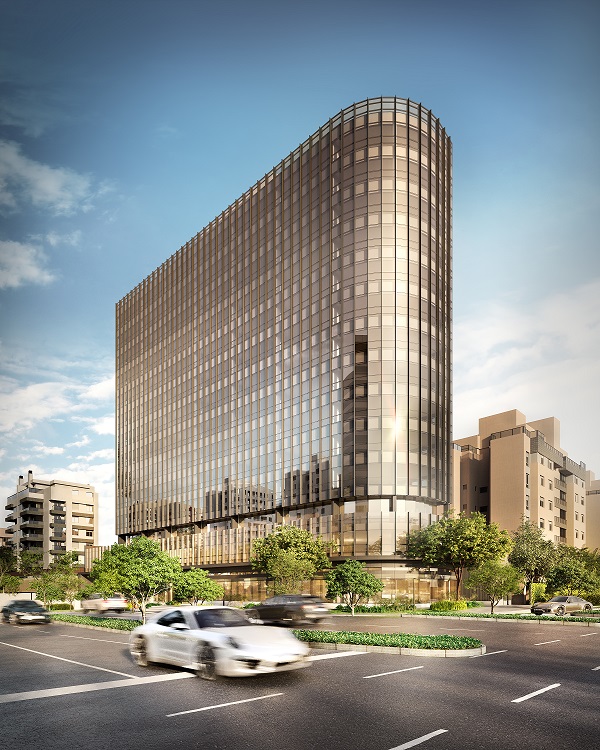
For specialists, the main challenge for corporate Human Resources in this post-pandemic world is to achieve a greater degree of appeal for employees, since corporate spaces need to be better and more interesting than home-office environments. With this scenario in mind, CFL Inc is launching NL 2800, a commercial tower born aligned with the demands of the world of work that emerged and grew stronger after the pandemic, in which relationships are more flexible and convenience is a fundamental value.
Privileged location
NL 2800 is unique in its market segment, starting with its privileged location, where Avenida Nilo Peçanha meets Shopping Iguatemi, on the most desired commercial corner in Porto Alegre. CFL Inc’s new commercial development sits next to the largest shopping centre in southern Brazil, Shopping Iguatemi, home to major brands, restaurants, shops and services, and to a boutique hotel, still without a defined flag, that promises to be the hospitality experience the Rio Grande do Sul capital was missing.
“This hotel will be a landmark for the city, which has long lacked a top-tier hospitality option combining convenience, comfort and exclusivity”, says the Marketing and Sales Director of CFL Inc, Rafael Starosta.
With an unprecedented proposal for Porto Alegre, the hotel will take inspiration from developments already existing in capitals such as Florianópolis and Curitiba, like LK Design Hotel, on Beira Mar Norte, and Nomaa Hotel, in Batel. There will be 84 rooms overlooking the Country Club lawns with direct access to its golf course, in an intimate, personalised and experience-driven proposal.
“Many Porto Alegre residents and visitors are nostalgic about the old Plaza São Rafael and its more than 260 rooms opened in 1973. Luxury hospitality has changed a great deal since then and today people look for more experience and exclusivity. The boutique hotel that will stand next to NL 2800 comes to fill that gap”, stresses Starosta.
A distinctive experience
A breath of quality of life amid the cosmopolitan buzz of the two avenues, the proximity to the Country Club is one of NL 2800’s many distinctive features. Parque Germânia is also a few blocks from the commercial tower and from the complex’s two other developments, the boutique hotel and a residential condominium, Estância – Residências do Golfe, which already has practically all its units sold.
“This is a spot with a vocation for commercial activity and very well suited to projects that embrace what we call walkability — that is, how suitable an area is for walking and how comfortable a circulation space it offers to those moving on foot or by bicycle”, explains Starosta.
Striking, the NL 2800 project is signed by the firms AT Arquitetura, HB, JA8 and Obra Prima, an award-winning international architecture studio based in Punta del Este. The project also provides flexible floor plans ranging from 49.34 sqm to 174.49 sqm, which can be combined into corporate floors of up to 639.33 sqm.
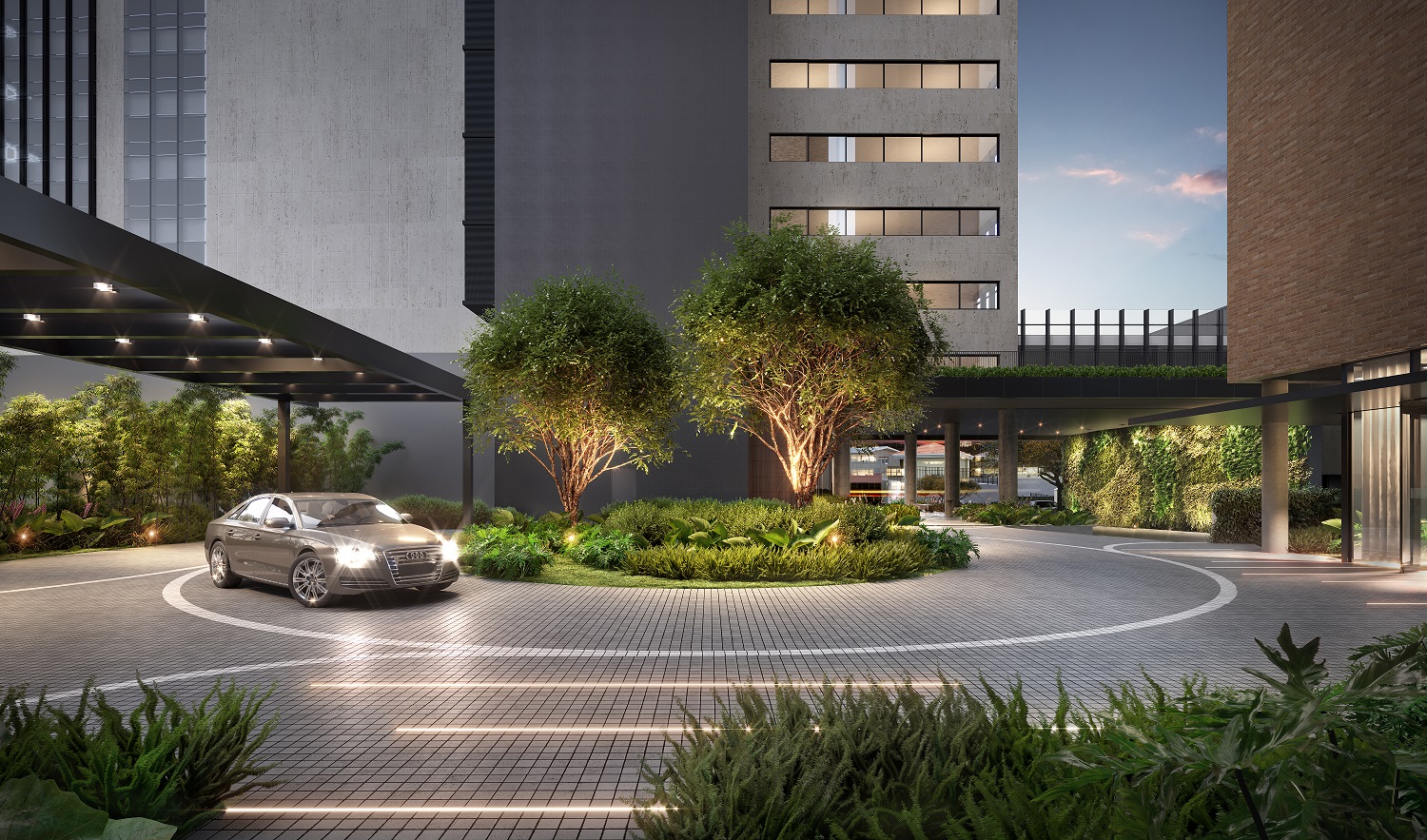
The boutique office will have complete infrastructure, with flexible multipurpose spaces offering varied uses, a planted terrace, a rooftop auditorium and distinctive landscaping and urban design. An internal boulevard will connect NL 2800, Estância – Residenciais do Golfe and the boutique hotel.
“The idea of synergy was present throughout the project. In addition to top-tier offices in the best location in the city, NL 2800 offers the practicality and convenience of being next to a unique hotel, close to the gardens and lawns of the Country Club, at the door of the largest shopping centre in southern Brazil and everything that represents in shopping facilities, services and conveniences all around”, says Starosta.
A heated market
The corporate real estate market, which saw the supply of new developments halted in the first year of the pandemic while the residential segment expanded, has heated up again as a result of the economic scenario of 2021 and 2022, when Brazilian GDP grew 7.5% across the two years combined. As a result, demand for new corporate space began to press on the currently available stock — if, at the most critical point of the pandemic, uncertainty about the future of offices and in-person work blocked the supply of new products, now it is demand for office space that is pressing on supply.
In the country’s leading market, the Avenida Brigadeiro Faria Lima area in São Paulo, where the headquarters of several investment banks, fund managers and mergers-and-acquisitions boutiques are concentrated, vacancy is just 3%, an extremely low figure against the 12% equilibrium benchmark — and one that becomes even lower when compared with early 2021, when the rate reached 20%. In this scenario, the price of corporate floor space has been rising, going from R$ 195.00/m2 in November 2021 to R$ 250.00/m2 a year later, according to real estate consultancy JLL.
The trend is repeated outside São Paulo, in markets such as Porto Alegre. “When we analyse the behaviour of the office segment, we see that it was ‘frozen’ during these last three years, with prices stalled and supply brutally reduced by uncertainty about the future of work”, highlights Starosta. “Now this pent-up demand is showing up very strongly. Companies did not stop growing and, on the return to in-person work, there was not enough space for everyone”, he adds.
Above all, the heating up of the corporate real estate market shows that “home office forever”, in practice, did not materialise. “It was far more a one-off solution for an exceptional moment than a structural and lasting change in the way companies organise work, which reinforces the need for a new concept of corporate offices, better suited to this post-pandemic moment”, concludes Starosta.
 3 MIN
3 MINBuilding also means caring for the city: urban revitalisation and improvements to Porto Alegre’s public spaces
A city is transformed every day through urban development, improvements to public spaces and initiatives that leave a legacy for the future.…
 News3 MIN
Wellness and high standards: the partnership between CFL and Technogym raises the well-being experience in our developments
The concept of living well today encompasses more than architecture, location and design. Living in a high-end development also means findin…
 Market1 MIN
Special homes on the market are a novelty in Porto Alegre
With a heated real estate sector and rising demand for larger spaces, the idea of acquiring a super apartment has become a viable and desira…